
Authors:
Basok Boris Ivanovych, Institute of Engineering Thermophysics of the NAS of Ukraine, National Technical University of Ukraine “Igor Sikorsky Kyiv Polytechnic Institute”
ORCID ID: https://orcid.org/0000-0002-8935-4248
Scopus Author ID: https://www.scopus.com/authid/detail.uri?authorId=6602074819
Researcher ID: https://www.webofscience.com/wos/author/record/HKV-6062-2023
Bazeev Yevhenii Trifonovych, Institute of Engineering Thermophysics of the NAS of Ukraine
ORCID ID : https://orcid.org/0000-0003-4292-1505
Belyaeva Tetyana Gennadiivna, Institute of Engineering Thermophysics of the NAS of Ukraine
ORCID ID : https://orcid.org/0000-0002-9748-6662.
Bozhko Ihor Konstantinovych, Institute of Engineering Thermophysics of the NAS of Ukraine
ORCID ID: https://orcid.org/0000-0001-7458-0835
Scopus Author ID: https://www.scopus.com/authid/detail.uri?authorId=57191523489
Veremiichuk.Yurii Andriyovych, Institute of Engineering Thermophysics of the NAS of Ukraine, National Technical University of Ukraine “Igor Sikorsky Kyiv Polytechnic Institute”
ORCID ID: https://orcid.org/0000-0003-0258-0478
Scopus Author ID: https://www.scopus.com/authid/detail.uri?authorId=59367017100
Researcher ID: https://www.webofscience.com/wos/author/record/I-3270-2018
Goncharuk Svitlana Mykhailivna, Institute of Engineering Thermophysics of the NAS of Ukraine
ORCID ID : https://orcid.org/0000-0002-5609-7337
Scopus Author ID: https://www.scopus.com/authid/detail.uri?authorId=55657179500
Davydenko Boris Viktorovych, Institute of Engineering Thermophysics of the NAS of Ukraine
ORCID ID :https://orcid.org/0000-0001-8738-7612
Kuzhel Liliia Mykolaivna, Limited Liability Company “NOVA IT ERA”, Ukraine, Kyiv
ORCID ID: https://orcid.org/0000-0002-5481-4566
Lysenko Oksana Mykolaivna, Institute of Engineering Thermophysics of National Academy of Science of Ukraine, National Technical University of Ukraine “Igor Sikorsky Kyiv Polytechnic Institute”
ORCID ID: https://orcid.org/0000-0003-3981-9796
Scopus Author ID: https://www.scopus.com/authid/detail.uri?authorId=57190439482
Nedbailo Oleksandr Mykolayovich, Institute of Engineering Thermophysics of National Academy of Science of Ukraine, National Technical University of Ukraine “Igor Sikorsky Kyiv Polytechnic Institute”
ORCID ID: https://orcid.org/0000-0003-1416-9651
Scopus Author ID: https://www.scopus.com/authid/detail.uri?authorId=55657185900
Novikov Volodymyr Gryhorovych, Institute of Engineering Thermophysics of the NAS of Ukraine
ORCID ID: https://orcid.org/0000-0003-1062-7336
Novitska Maryna Pavlovna, Institute of Engineering Thermophysics of the NAS of Ukraine
ORCID ID: https://orcid.org/0000-0003-2867-101X
Priemchenko Viktor Petrovich, Institute of Engineering Thermophysics of the NAS of Ukraine
ORCID ID: https://orcid.org/0000-0003-4785-4815
Priymak Oleksandr Viktorovych, Kyiv National University of Construction and Architecture, Kyiv
ORCID ID https://orcid.org/0000-0002-3081-6057
Tkachenko Myroslav Volodymyrovych, Institute of Engineering Thermophysics of the NAS of Ukraine
ORCID ID : https://orcid.org/0000-0001-8345-1613
Scopus Author ID:55656982300
Khybyna Maryna Anatoliivnа, Institute of Engineering Thermophysics of the NAS of Ukraine
ORCID ID: https://orcid.org/0000-0001-7938-4366
Fareniuk Yehor Gennadiyovych, State institution “Energy efficiency fund”
ORCID ID : https://orcid.org/0000-0001-8613-877х
Reviewers:
Avramenko Andrii Oleksandrovych, Corresponding Member of NAS of Ukraine Institute of Engineering Thermophysics of the NAS of Ukraine
ORCID ID https://orcid.org/0000-0002-2416-3512
Researcher ID: J-2915-2014
Scopus Author ID: 24362191200
Denysiuk Sergii Petrovych, Professor, Doctor of Technical ScienceNational Technical University of Ukraine “Igor Sikorsky Kyiv Polytechnic Institute”, Educational and scientific institute of energy saving and energy management Institute ORCID ID https://orcid.org/0000-0002-6299-3680
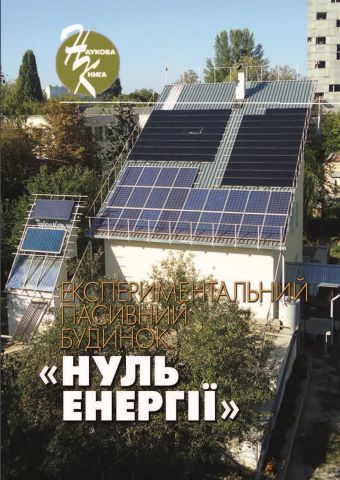
The monograph presents the research carried out within the framework of the scientific project «Development of measures to improve the energy efficiency of a building with the consistent implementation of measures: energy-efficient house → «passive» house → «zero-energy» house → «smart» house → house as a micro smart grid system» of the target complex interdisciplinary scientific research program of the NAS of Ukraine on the development of scientific foundations for the rational use of natural resource potential and sustainable development. An analysis was conducted and proposals were developed for measures to develop norms and standards for energy efficiency criteria for buildings in accordance with the regulatory documents of the European Union. The energy efficiency of a building has been studied as a property of a building, its structural elements and engineering equipment to ensure, during the expected life cycle of the building, the everyday needs of a person and optimal microclimatic conditions for his stay and residence in the premises of such a building at a normatively permissible (optimal) level of energy resource consumption for heating, lighting, ventilation, air conditioning, hot water supply. The research was carried out on the basis of the experimental house of the Institute of Engineering Thermophysics of the NAS of Ukraine. The world experience of creation and implementation of energy-efficient buildings, passive type buildings, «zero energy», «smart» buildings is presented.
References:
Chapter 1
- Akshey B., Swati B., Disha B. Green Buildings – A Step towards Environmental Protection. Journal of Waste Recycling. 2018. Vol. 3, No. 1. P. 7.
- Komelina O.V. Shcherbinina S.A. Suchasni problemy zabezpechennia enerhoefektyvnosti zhytlovoho budivnytstva Ukrainy. Problemy ekonomiky. 2014. № 3. S. 108-114.
- Serdiuk R.V., Franyshyna S.Yu. Enerhozberezhennia v budivnytstvi. Vymohy sohodennia. Visnyk Vinnytskoho politekhnichnoho instytutu. 2009. № 4. S. 17-21.
- Dolinskyi A.A., Basok B.I., Nedbailo O.M., Bieliaieva T.H., Khybyna M.A., Tkachenko M.V., Novitska M.P. Kontseptualni osnovy stvorennia eksperymentalnoho budynku typu nul enerhii. Budivelni konstruktsii. 2013. Vyp. 77. S. 222-227.
- Lunyna A.A., Teslia A.Y., Koba A.R., Nedbailo A.N., Beliaeva T.H., Khybyna M.A., Tkachenko M.V. Eksperymentalnaia teplonasosnaia ustanovka s hruntovym kollektorom dlia avtonomnoho teplosnabzhenyia y kondytsyonyrovanyia. Promyslova teplotekhnika. 2009. T. 31, № 7. S. 25-31.
- Basok B.I., Bieliaieva T.H., Khybyna M.A. Vykorystannia vidnovliuvanykh dzherel enerhii ta gruntovykh teploakumuliatoriv dlia komunalnoho teplopostachannia. V kn.: Problemy ekolohii ta ekspluatatsii ob›yektiv enerhetyky: zbirnyk prats. Instytut promyslovoi ekolohii. Kyiv, 2021. S. 116-121.
- Bieliaieva T.H. Teploobmin u systemi «U-podibnyi teploobminnyk-grunt» u protsesakh akumuliuvannia ta vyluchennia teploty. Promyslova teplotekhnika. 2013. T. 35, № 1. S. 72-79.
- Patent Ukrainy na korysnu model № 44191. Dolinskyi A.A., Basok B.I., Kuzhel L.M. ta in. Sposib vyluchennia teploty kolodiaznoi vody. Opubl. 25.09.2009. Biul. №18, 2009.
- Patent Ukrainy na korysnu model № 42349. Dolinskyi A.A., Basok B.I., Bieliaieva T.H. ta in. Sposib vyluchennia teploty vody z vodozabirnoi sverdlovyny. Opubl. 25.06.2009. Biul. № 12, 2009.
- Basok B.I., Koba A.R., Nedbailo A.N., Tkachenko M.V., Khybyna M.A., Bieliaieva T.H., Teslia A.Y., Lunina A.A. Stvorennia gruntovo-vodo-vodianykh teploobminnykiv dlia teplonasosnykh tekhnolohii teplopostachannia prymishchen. Nauka ta innovatsii. 2012. T. 8, № 1. S. 67-76. https://doi.org/10.15407/scin8.01.067
- Asano O., Misonou M., Kato H., Nagasaka S. Advanced window incorporating glazing. In: Proc. SPIE 3789, Solar Optical Materials XVI (11 October 1999). Р. 8-20. https://doi.org/10.1117/12.367557
- Ruck B. Wind-tunnel measurements of flow field characteristics around a heated model building. Journal of Wind Engineering and Industrial Aerodynamics. 1993. Vol. 50. Р. 139-152. https://doi.org/10.1016/0167-6105(93)90069-Z
- Nakamura H., Igarashi T., Tsutsui T. Local heat transfer around a wall-mounted cube in the turbulent boundary layer. International Journal of Heat and Mass Transfer. 2001. Vol. 44., No. 18. P. 3385-3395. https://doi.org/10.1016/S0017-9310(01)00009-6
- Nakamura H., Igarashi T., Tsutsui T. Local heat transfer around a wall-mounted cube at 45° to flow in a turbulent boundary layer. International Journal of Heat and Mass Transfer. 2003. Vol. 24, No. 6. P. 807-815. https://doi.org/10.1016/S0142-727X(03)00087-0
- Meinders E.R. Experimental study of heat transfer in turbulent flows over wallmounted cubes. PhD thesis. Technische Universiteit Delft, 1998.
- Barlow J.F, Belcher S.E. A wind tunnel model for quantifying fluxes in the urban boundary layer. Boundary-Layer Meteorology. 2002. Vol. 104. P. 131-150. https://doi.org/10.1023/A:1015555613672
- Barlow J.F., Harman I.N., Belcher S.E. Scalar fluxes from urban street canyons. Part I: Laboratory simulation. Boundary-Layer Meteorology. 2004. Vol. 113, No. 3. Р. 369-385. https://doi.org/10.1007/s10546-004-6204-8
- Narita K. Experimental study of the transfer velocity for urban surfaces with a water evaporation method. Boundary-Layer Meteorol. 2007. Vol. 122, No. 2. Р. 293-320. https://doi.org/10.1007/s10546-006-9116-y
- Loveday D.L., Taki A.H. Convective heat transfer coefficient at a plane surface on a full-scale building facade. International Journal of Heat and Mass Transfer. 1996. Vol. 39, No. 8. Р. 1729-1742. https://doi.org/10.1016/0017-9310(95)00268-5
- Yazdanian M., Klems J.H. Measurement of the exterior convective film coefficient for windows in low-rise buildings. ASHRAE Trans. 1994. Vol. 100, No. 1. Р. 1087-1096.
- Griffith B., Turler D., Goudey H., Arasteh D. Experimental techniques for measuring temperature and velocity fields to improve the use and validation of building heat transfer models. In: Thermal Performance of the Exterior Envelopes of Buildings: Proc. VII Int. Conf. (Clearwater Beach, Florida, December 7-11, 1998).
- Hagishima A., Tanimoto J., Narita K. Intercomparisons of experimental convective heat transfer coefficients and mass transfer coefficients of urban surfaces. Boundary-Layer Meteorol. 2005. Vol. 117, No. 3. Р. 551-576. https://doi.org/10.1007/s10546-005-2078-7
- Emmel M.G., Mendes N. Аnalysis of wind-driven flow and external convective heat transfer coefficients for the bestest model building. In: Proc. IX Int. IBPSA Conf.(Montreal, Canada, August 15-18, 2005).
- Blocken B., Defraeye T., Derome D., Carmeliet J. High-resolution CFD simulations for convective heat transfer coefficients at the facade of a low-rise building. Building and Environment. 2009.Vol. 44, No. 12. Р. 2396-2412. https://doi.org/10.1016/j.buildenv.2009.04.004
- Defraeye T., Blocken B., Carmeliet J. CFD simulation of heat transfer at surface of bluff bodies in turbulent boundary layers: evaluation of a forced-convective temperature wall function for mixed convection. Journal of Wind Engineering and Industrial Aerodynamics. 2012. Vol. 104-106. Р. 439-446. https://doi.org/https://doi.org/10.1016/j.jweia.2012.02.001
- Janssen H., Blocken B., Carmeliet J. Conservative modelling of the moisture and heat transfer in building components under atmospheric excitation. International Journal of Heat and Mass Transfer. 2007. Vol. 50. Р. 1128-1140. https://doi.org/10.1016/j.ijheatmasstransfer.2006.06.048
- Juan C.S., Blanco E., Heras M.R. Numerical analysis of convective heat transfer coefficient in building facades under the action of the wind. In: Passive and Low Energy Architecture: Proc. 25th Conf. PLEA 2008 (Dublin, October 22-24, 2008).
- Basok B.Y., Davydenko B.V., Novytskaia M.P., Honcharuk S.M., Tyrynov A.Y. Teplootdacha s poverkhnostei ohrazhdaiushchykh konstruktsyi trekhetazhnoho admynystratyvnoho zdanyia. Promyslova teplotekhnika. 2012. T. 34, № 2. S. 81-86.
- Franke J., Hellsten A., Schlunzen H., Carissimo B. Best practice guideline for the CFD simulation of flows in the urban environment. COST Action 732: Quality assurance and improvement of microscale meteorological models. Hamburg, 2007.
- Wolfshtein M. The velocity and temperature distribution in one-dimensional flow with turbulence augmentation and pressure gradient. International Journal of Heat and Mass Transfer. 1969. Vol. 12, No. 3. Р. 301-318. https://doi.org/10.1016/0017-9310(69)90012-X
- Defraeye T., Blocken B., Carmeliet J. CFD analysis of convective heat transfer at the surfaces of a cube immersed in a turbulent boundary layer. International Journal of Heat and Mass Transfer. 2010. Vol. 53, No. 1-3. Р. 297-308. https://doi.org/10.1016/j.ijheatmasstransfer.2009.09.029
- Basok B.I., Nedbailo A.N., Novitskaya M.P., Tkachenko M.V., Goncharuk S.M. Computational modeling of the heat exchange between the heat-transport medium and the air in a room with floor heating. Journal of Engineering Physics and Thermophysics. 2013. Vol. 86, No. 2. Р. 418-423. https://doi.org/10.1016/j.ijheatmasstransfer.2009.09.029
Chapter 2
- Faist V. Osnovnye polozhenyia po proektyrovanyiu passyvnykh domov. Moskva: ASV, 2008. 140 s.
- Basok B.I. Eksperymentalnyi budynok pasyvnoho typu. Enerhoefektyvnist v budivnytstvi ta arkhitekturi. 2014. № 6. S. 3-8.
- Parente A., Benocci C. On the RANS simulation of neutral ABL flows. In: Computational Wind Engineering: Proc. 5th Int. Symp. CWE 2010 (Chapel Hill, North Carolina, USA May 23-27, 2010).
- Cabezon D., Iniesta A., Ferrer E., Marti I. Comparing linear and nonlinear wind flow models. EUROMECH Colloquium 464b: Wind Energy. (Oldenburg, Germany, October 4-7). Р. 275-279.
- Franke J., Hellsten A., Schlunzen H., Carissimo B. Best practice guideline for the CFD simulation of flows in the urban environment cost action 732 quality assurance and improvement of microscale meteorological models. COST Office, 2007. https://sciencespo.hal.science/ENPC-CEREA/hal-04181390v1.
- Launder B.E., Spalding D.B. The numerical computation of turbulent flows. Computer Methods in Applied Mechanics and Engineering. 1974. Vol. 3, No. 2. Р. 269-289. https://doi.org/10.1016/0045-7825(74)90029-2.
- Richards P., Hoxey R. Appropriate boundary conditions for computational wind engineering models using the k-ε turbulence model. Journal of Wind Engineering and Industrial Aerodynamics. 1993. Vol. 46-47. P. 145-153. https://doi.org/10.1016/0167-6105(93)90124-7
- Panofsky H.A., Dutton J.A. Atmospheric Turbulence: Models ANS Methods for Engineering Applications. Wiley-Interscience, 1984.
- Detering H.W., Etling D. Application of the E-ε turbulence model to the atmospheric boundary layer. Boundary-Layer Meteorol. 1985. Vol. 33. P. 113-133. https://doi.org/10.1007/BF00123386.
- Duynkerke P.G. Application of the E-ε turbulence closure model to the neutral and stable atmospheric boundary layer. J. Atmos. Sci. 1988. Vol. 45. Р. 865-880. https://doi.org/10.1175/1520-0469(1988)045<0865:AOTTCM>2.0.CO;2
- Beljaars A.C.M. The influence of sampling and filtering on measured wind gusts. Journal of Atmospheric and Oceanic Technology. 1987. Vol. 4, No. 4. P. 613-626. https://doi.org/10.1175/1520-0426(1987)004<0613:TIOSAF>2.0.CO;2
- Yakhot V., Orszag S.A. Renormalization group analysis of turbulence I. Basic theory. Journal of Scientific Computing. 1986. Vol. 1, No. 1. P. 3-51. https://doi.org/10.1007/BF01061452
- Yang Y., Ming G., Suqin C., Xinyang J. New inflow boundary conditions for modelling the neutral equilibrium atmospheric boundary layer in computational wind engineering. Journal of Wind Engineering and Industrial Aerodynamics. 2009. Vol. 97, No. 2. P. 88-95. https://doi.org/10.1016/j.jweia.2008.12.001
- Novitska M.P. Chyselne modeliuvannia trypoverkhovoi budivli z pryvikonnymy zahlyblenniamy. Promyslova teplotekhnika. 2015. T. 37, № 4. S. 88-92. https://doi.org/10.31472/ihe.4.2015.10
- Basok B.I., Davydenko B.V., Novikov V.H. Chyselne modeliuvannia vitrovykh potokiv v zoni miskoi zabudovy. Vidnovliuvana enerhetyka. 2014. T. 37, № 2. S. 46-59.
- Yang Y., Gu M., Jin X. New inflow boundary conditions for modeling the neutral equilibrium atmospheric boundary layer in SST k-ω model. In: Proc. Seventh Asia-Pacific Conference on Wind Engineering (Taipei, Taiwan, November 8-12, 2009).
- Hjul J., Kjemtrup I.-M., Lauridsen T.B. Wind Conditions Around High-rise Buildings Master Thesis Master of Science in Structural and Civil Engineering. Completed: 4th June 2010. Number of pages: 152.
- Entsyklopedyia polymerov: v 3 tomakh. T. 2. Pod red. V.A. Kabanova. Moskva, 1974. S. 563-564.
- Basok B.I, Davydenko B.V., Honcharuk S.M., Kuzhel L.M. Eksperymentalni doslidzhennia teploperenosu cherez suchasni vikonni konstruktsii v realnykh umovakh yikh ekspluatatsii. Vikonni tekhnolohii. 2015. № 2. S. 24-26.
- Davydenko B.V., Honcharuk S.M., Novitska M.P., Kuzhel L.M., Krasota D.O. Eksperymentalni doslidzhennia teploperenosu cherez suchasni vikonni konstruktsii v realnykh umovakh ekspluatatsii. Enerhoefektyvnist u budivnytstvi ta arkhitekturi. 2015. № 7. S. 65-71.
- Basok B.I., Davydenko B.V., Kuzhel L.M., Honcharuk S.M., Bieliaieva T.H. Eksperymentalni doslidzhennia teploperedachi cherez enerhoefektyvni sklopakety z nyzkoemisiinym miakym pokryttiam. Promyslova teplotekhnika. 2017. T. 39, № 1. S. 41-48. https://doi.org/10.31472/ihe.1.2017.06
- Dekusha L.V., Vorobiov L.I., Hryshchenko T.H., Mendeleeva T.V., Kovtun S.I. Suchasnyi stan metrolohichnoho zabezpechennia teplopotokovykh vymiriuvan za dopomohoiu pervynnykh peretvoriuvachiv teplovoho potoku. V kn.: Metrolohiia ta vymiriuvalna tekhnika («Metrolohiia-2004»): nauk. pratsi IV mizhnar. nauk.-tekhn. konf. Kharkiv: Instytut metrolohii, 2004. T. 2. S. 26-31.
- Basok B.Y., Davydenko B.V, Ysaev S.A., Honcharuk S.M., Kuzhel L.N. Chyslennoe modelyrovanye teploperenosa cherez dvukhkamernyi steklopaket. Ynzhenerno-fyzycheskyi zhurnal. 2016. T. 89, № 5. S. 1288-1295. https://doi.org/10.1007/s10891-0151241-3
- Basok B.I., Davydenko B.V., Kuzhel L.M., Novikov V.H., Kalinina M.F. Chyselni doslidzhennia vplyvu radiatsiinoho ta konvektyvnoho teploperenosu na teploizoliatsiinu spromozhnist dvokamernykh sklopaketiv. Promyslova teplotekhnika. 2017. T. 39, № 3. S. 60-65. https://doi.org/10.31472/ihe.3.2017.09
- Patankar S.V. Chyslennye metody reshenyia zadach teploobmena y dynamyky zhydkosty. Moskva: Enerhoatomyzdat, 1984. 152 s.
- Peire R., T.D. Teilor. Vychyslytelnye metody v zadachakh mekhanyky zhydkosty. Lenynhrad: Hydrometeoyzdat, 1986. 352 s.
- Rabynovych V.A., Vasserman A.A., Nedostup V.Y., Veksler L.S. Teplofyzycheskye svoistva neona, arhona, kryptona y ksenona. Moskva. Yzdatelstvo standartov, 1976. 636 s.
- Patent Ukrainy na korysnu model № 88791. Basok B.I., Novitska M.P., Kuzhel L.M., Bozhko I.K., Nedbailo O.M., Tkachenko M.V., Honcharuk S.M. Sposib zabezpechennia povitriano-teplovoi zavisy teplotoiu gruntu. Opubl. 25.03.2014. Biul. № 6.
- Badescu V. Simple and accurate model for the ground heat exchanger of apassive house. Renew Energy. 2007. Vol. 32, No. 5. P. 845-855. https://doi.org/10.1016/j.renene.2006.03.004
- Amara S., Nordell B., Benyoucef B. Using Fouggara for Heating and Cooling Buildings in Sahara. Energy Procedia. 2011. Vol. 6. P. 55-64. https://doi.org/10.1016/j.egypro.2011.05.007
- Nakorchevskyi A.Y., Beliaeva T.H. Rehressyonnyi analyz hlubyn hodovykh fluktuatsyi temperatur v verkhnykh sloiakh hrunta. Promyslova teplotekhnika.. 2005. T. 27, № 6. S. 86-90.
- Singh A., Singh R. Performance Analysis of rectangular Earth-Air Tunnel System used for Air-Conditioning of the College Classroom. Journal of Energy Technologies and Policy. 2015. Vol. 5, No. 8. Р. 71-79.
- Bansal V., Misra R., Agarwal G., Mathur J. Transient effect of soil thermal conductivity and duration of operation on performance of Earth Air Tunnel Heat Exchanger. Applied Energy. 2013. Vol. 103. P. 1-11. https://doi.org/10.1016/j.apenergy.2012.10.014
- Cuny M., Lin J., Siroux M., Magnenet V., Fond C. Influence of coating soil types on the energy of earth-air heat exchanger. Energy and Buildings. 2018. Vol. 158. P. 1000-1012. https://doi.org/10.1016/j.enbuild.2017.10.048
- Rawat P., Capoor A. Recent advances in heating and cooling using earth air heat exchanger (EAHE): a review. International Journal of Engineering Development and Research. 2016. Vol. 4, No. 2. P. 1398-1404.
- Basok B.I., Novitska M.P. Teplofizychne modeliuvannia povitriano-gruntovoho teploobminnyka dlia teplovoi zavisy fasadnykh stin eksperymentalnoho enerhoefektyvnoho budynku. Promyslova teplotekhnika. 2017. T. 39, № 1. S. 35-38. https://doi.org/10.31472/ihe.1.2017.07
- Ysachenko V.P. y dr. Teploperedacha. Moskva: Enerhyia, 1975. 488 s.
- Basok B.I., Novitska M.P. Bahatofaktornyi analiz efektyvnosti teplovoi povitrianoi zavisy eksperymentalnoho enerhoefektyvnoho budynku. V kn.: Aktualni pytannia enerhozberezhennia yak vymoha bezpeky zhyttiediialnosti: naukovo-tekhnichnyi zbirnyk; materialy Mizhnarodnoi naukovo-praktychnoi konferentsii (7-8 chervnia 2018 r., Kyiv, Ukraina). Kyiv: Osnova, 2018. S. 21-27.
Chapter 3
- Williams J., Mitchell R., Raicic V., Vellei M., Mustard G., Wismayer A., Yin X., Davey S., Shakil M., Yang Y., Parkin A., Coley D. Less is more: A review of low energy standards and the urgent need for an international universal zero energy standard. Journal of Building Engineering. 2016. Vol. 6. P. 65-74. https://doi.org/10.1016/j.jobe.2016.02.007
- Sartori I., Napolitano A., Voss K. Net zero energy buildings: A consistent definition framework. Energy and Buildings. 2012. Vol. 48. P. 220-232. https://doi.org/10.1016/j. enbuild.2012.01.032
- Torcellini P., Pless S., Deru M., Crawley D. Zero Energy Buildings: A Critical Look at the Definition. ACEEE Summer Study (August 14-18, 2006, Pacific Grove, California, U.S.). Department of Energy, 2006.
- Segers R. Three options to calculate the percentage renewable energy: an example for a EU policy debate. Energy Policy. 2008. Vol. 36, No. 4. P. 3243-3248. https://doi.org/10.1016/j.enpol.2008.05.014
- Marszal A.J., Heiselberga P., Bourrelle J.S., Musall E., Voss K., Sartori I., Napolitano A. Zero Energy Building – A review of definitions and calculation methodologies. Energy and Buildings. 2011. Vol. 43, No. 4. P. 971-979. https://doi.org/10.1016/j.enbuild.2010.12.022
- Paoletti G., Pascuas R.P., Pernetti R., Lollini R. Nearly Zero Energy Buildings: An Overview of the Main Construction Features across Europe. Buildings. 2017. Vol. 3, No. 7. https://doi.org/10.3390/buildings7020043
- Shehadi M. Net-Zero Energy Buildings: Principles and Applications. In: Zero-energy Buildings. IntechOpen, 2020. https://doi.org/10.5772/intechopen.92285
- Dolinskyi A.A., Basok B.I., Nedbailo O.M., Bieliaieva T.H., Khybyna M.A., Tkachenko M.V., Novitska M.P. Kontseptualni osnovy stvorennia eksperymentalnoho budynku typu nul enerhii. Budivelni konstruktsii. 2013. Vyp. 77. S. 222-227.
- Bieliaeva T.H. Teploobmin v systemi «U-podibnyi teploobminnyk-hrunt» u protsesakh akumuliuvannia ta vyluchennia teploty. Promyslova teplotekhnika. 2013. T. 35, № 1. S. 72-79.
- Patent na korysnu model № 44191. Dolinskyi A.A., Basok B.I., Kuzhel L.M. ta in. Sposib vyluchennia teploty kolodiaznoi vody. Opubl. 25.09.2009. Biul. №18, 2009.
- Patent na korysnu model № 42349. Dolinskyi A.A., Basok B.I., Bieliaieva T.H. ta in. Sposib vyluchennia teploty vody z vodozabirnoi sverdlovyny. Opubl. 25.06.2009. Biul. № 12, 2009.
- Basok B.I., Koba A.R., Nedbailo A.N., Tkachenko M.V., Khybyna M.A., Bieliaieva T.H., Teslia A.Y., Lunina A.A. Stvorennia gruntovo-vodo-vodianykh teploobminnykiv dlia teplonasosnykh tekhnolohii teplopostachannia prymishchen. Nauka ta innovatsii. 2012. T. 8, № 1. S. 67-76. https://doi.org/10.15407/scin8.01.067
- Basok B.I., Bozhko I.K., Bieliaieva T.H., Honcharuk S.M., Nedbailo O.M., Novitska M.P., Tkachenko M.V., Khybyna M.A. Polivalentna systema teplozabezpechennia eksperymentalnoho budynku pasyvnoho typu (ploshcheiu 300 m2) na osnovi vykorystannia vidnovliuvanykh ta alternatyvnykh dzherel enerhii. Nauka ta innovatsii. 2014. T. 10, № 6. S. 34-51. https://doi.org/10.15407/scin10.06.034
- Basok B.I., Nedbailo O.M., Bozhko I.K., Tkachenko M.V. Skhemni rishennia osnashchennia enerhoefektyvnoho budynku systemoiu teplozabezpechennia. Promyslova teplotekhnika. 2013. T. 35, № 1. S. 50-56.
- Bozhko Y.K., Nedbailo O.M., Tkachenko M.V., Zasetskyi Y.H. Kombynyrovannaia systema teploobespechenyia vysokoenerhoeffektyvnoho doma. Enerhoefektyvnist v budivnytstvi ta arkhitekturi. 2014. № 6. S. 14-22.
- Bozhko I.K., Nedbailo O.M., Tkachenko M.V. Polivalentna systema teplozabezpechennia pasyvnoho budynku. Enerhoefektyvnist v budivnytstvi ta arkhitekturi. 2015. № 7. S. 21-30.
- Patent Ukrainy na korysnu model № 82399. Basok B.I., Nedbailo O.M., Tkachenko M.V. ta in. Systema teplopostachannia budynku na osnovi helioustanovky ta teplovoho nasosa. Opubl. 25.07.2013. Biul. № 14, 2013.
- Basok B.I., Nedbailo O.M., Bozhko I.K., M.V. Tkachenko M.V. Systema opalennia na osnovi teplovoho nasosa ta horyzontalnoho gruntovoho. V kn.: Aktualni problemy enerhetyky ta ekolohii: zbirnyk prats KhVI Vseukrainskoi konferentsii. Odesa, 2016. S. 4-6.
- Lunyna A.A., Teslia A.Y., Koba A.R., Nedbailo A.N., Beliaeva T.H., Khybyna M.A., Tkachenko M.V. Eksperymentalnaia teplonasosnaia ustanovka s hruntovym kollektorom dlia avtonomnoho teplosnabzhenyia y kondytsyonyrovanyia. Promyslova teplotekhnika. 2009. T. 31, № 7. S. 25-31.
- Basok B.Y., Beliaeva T.H., Khybyna M.A., Bozhko Y.K., Lunyna A.A. Eksperymentalnye yssledovanyia temperaturnoho rezhyma hruntovoho massyva pry sezonnom yzvlechenyy teploty hrunta horyzontalnym teploobmennykom nehlubokoho zalehanyia. Promyslova teplotekhnika. 2015. T. 37, № 4. S. 61-69. https://doi.org/10.31472/ihe.4.2015.07
- Nakorchevskyi A.Y. Hruntovye akkumuliatory teploty y modernyzatsyia kommunalnoi teploenerhetyky. Kyev: Naukova dumka, 2010. 256 s.
- Basok B.I., Vorobiov L.Y., Mykhailyk V.A., Lunina A.O. Teplofizychni vlastyvosti pryrodnoho gruntu. Promyslova teplotekhnika. 2008. T. 30, № 4. S. 77-85.
- Basok B.I., Avramenko A.O., Kuzhel L.M. Hidrodynamika i teploobmin v odynochnomu teploobminnyku typu truba v trubi systemy sverdlovyna – grunt. Promyslova teplotekhnika. 2009. T. 31, № 1. S. 21-28.
- Basok B.Y., Avramenko A.A., Ryzhkov S.S., Lunyna A.A. Dynamyka teploobmena zhydkosty v hruntovom priamolyneinom odynochnom trubnom elemente (teploobmennyke). Promyslova teplotekhnika. 2009. T. 31, № 1. S. 62-67. https://doi.org/10.1111/j.0954-6820.1898.tb00372.x
- Basok B.Y., Nakorchevskyi A.Y. Teplofyzyka vlyianyia solnechnoho yzluchenyia na zdanyia. Kyev: Naukova dumka, 2016. 224 s.
- Basok B.I., Bieliaieva T.H., Bozhko I.K., Nedbailo O.M., Novikov V.H., Khybyna M.A. Systema elektrozabezpechennia eksperymentalnoho budynku typu 0-enerhii (ploshcheiu 300 m.) na osnovi vykorystannia vidnovliuvanykh i alternatyvnykh dzherel enerhii. Nauka ta innovatsii. 2015. T. 11, № 6. S. 29-39. https://doi.org/10.15407/scin11.06.029
- Novikov V.H. Enerhetycheskye y turbulentnye kharakterystyky vetrovoho potoka v antropohennoi srede. Promyslova teplotekhnika. 2015. T. 37, № 2. S. 20-31. https://doi.org/10.31472/ihe.2.2015.03
- Basok B.I., Davydenko B.V., Novikov V.H. Chyselne modeliuvannia vitrovykh potokiv v zoni miskoi zabudovy. Vidnovliuvana enerhetyka. 2014. T. 37, № 2. S. 46-59.
- Caberzon D., Sanz J., Beeck J. Sensitivity analysis on turbulence models for the ABL in complex terrain. http://proceedings.ewea.org/ewec2007/allfiles2/134_Ewec2007fullpaper.pdf.
- Cabezon D., Iniesta A., Ferrer E., Marti I. Comparing linear and non linear wind flow models. http://proceedings.ewea.org/ewec2006/index2/php?page=searchresult&auteur=Cabezon
- Wieringa J., Davenport A.G., Grimond B., Oke T.R. New revision of Davenport roughness classification. 3rd European & African Conference on Wind Engineering. Eindhoven, Netherlands, July 2001.
- Panofsky & Dutton 1984.
- Stangroom P. CFD modeling of wind flow over terrain. Thesis submitted to the University of Nottingham for degree of Doctor of Philosophy. January 2004. 298 p. http://etheses.nottingham.ac.uk/112/
- Franke J., Hellsten A., Schlunzen H., Carissimo B. Best practice guideline for the CFD simulation of flows in the urban environment cost action 732 quality assurance and improvement of microscale meteorological models. COST Office, 2007. https://sciencespo.hal.science/ENPC-CEREA/hal-04181390v1
- Blocken B., Stathopoulos T., Carmeliet J. CFD simulation of the atmospheric boundary layer: wall function problems. Atmospheric Environment. 2007. Vol. 41, No. 2. P. 238-252. https://doi.org/10.1016/j.atmosenv.2006.08.019
- Fallo D. Wind energy resource evaluation in a site of central Italy by CDF simulation. Dipartimento di Ingegneria Meccanica, Cagliari, 2007. 129 p.
- Richards P., Hoxey R. Appropriate boundary conditions for computational wind engineering models using the k-ε turbulence model. Journal of Wind Engineering and Industrial Aerodynamics. 1993.Vol. 46-47. P. 145-153. https://doi.org/10.1016/0167-6105(93)90124-7
- Dutton A.G., Halliday J.A., Blanch M.J. The feasibility of building-mounted wind turbines (BUWTs): Achieving their potential for carbon emission reductions. Final report. 2005. http://ukerc.rl.ac.uk/pdf/BUWTfinal_v004_full.pdf
- Clarke J.A. Energy Simulation in Building Design. 2nd Edition. 2001.
- ASHRAE Handbook Fundamental. 2009.
- Reda I., Andreas A. National Solar Position Algorithm for Solar Radiation Applications. Technical Report. Revised January. 2008. https://doi.org/10.2172/15003974
- ASHRAE Handbook. Fundamental. 2001.
- Wei-Liang K., I. Chen Wu. Numerical simulation and visualization for building envelope thermal distribution analysis. International Conference on Construction Applications of Virtual Reality. 2011.
- Gueymard C. Revising ASHRAE climatic data for design and standards. Part 2: Clear-sky solar radiation model. ASHRAE Transactions. January. 2013.
- Duffie J.A., Beckman W.A. Solar Engineering of Thermal Processes. Fourth Edition. 2013. https://doi.org/10.1002/9781118671603
- Myers D.R. Solar radiation Practical Modeling for Renewable Energy Applications. 2013.
- Shaltout M.A., Hassan A.H., Fathy A.M. Total suspended particles and solar radiation over Cairo and Aswan. Renewable Energy. 2001. Vol. 23, No. 3-4. Р. 605-619. https://doi.org/10.1016/S0960-1481(00)00135-X
- Stewart D.A., Dudel H.P., Levitt L.J. Solar radiation in Saudi Arabia. Weapons Sciences Directorate Research, Development, and Engineering Center, DTIC Тechnical report. RD-WS-93-6. June 1993. https://doi.org/10.21236/ADA269970
- Tyagi A.P. Solar radiant energy over India. India meteorological department ministry of earth sciences. New Delhi, 2009. 4179 р.
- Doost A.K., Akhlaghi M. Estimation and Comparison of Solar Radiation Intensity by Some Models in a Region of Iran. Journal of Power and Energy Engineering. 2014. Vol. 2, No. 4. Р. 345-351. https://doi.org/10.4236/jpee.2014.24046
- Becker S. Calculation of direct solar and diffuse radiation in Israel. International Journal of Climatology. 2001. Vol. 21. Р. 1561-1576. https://doi.org/10.1002/joc.650
- Noorian A.M., Morad I., Kamal G.A. Evaluation of 12 models to estimate hourly diffuse irradiation on inclined surfaces. Renewable Energy. 2008. Vol. 33. Р. 1406-1412. https://doi.org/10.1016/j.renene.2007.06.027
- Wong L.T., Chow W.K. Solar radiation model. Applied Energy. 2001. Vol. 69. P. 191-224. https://doi.org/10.1016/S0306-2619(01)00012-5
- Kravchenko V.P., Kravchenko Ye.V., Bondar I.V. Instrumentalne vyznachennia insoliatsii v raioni m. Odesy. Enerhetyka: ekonomika, tekhnolohii, ekolohiia. 2016. № 1. S. 20-27.
Chapter 4
- Zolotarev S.V., Koltuntsev A.V. ISaGRAF 6.1: dynamychnoe razvytye y kontseptualnye novshestva. Avtomatyzatsyia v promyshlennosty. 2012. № 8.
- Zolotarev S.V. ISaGRAF y funktsyonalno bezopasnye systemy: sovremennyi trend v razvytyy tekhnolohyi prohrammyrovanyia kontrollerov. Myr kompiuternoi avtomatyzatsyy: vstrayvaemye kompiuternye systemy. 2012. № 4. S. 42—50.
- Zolotarev S.V. Tekhnolohyia prohrammyrovanyia kontrollerov ISaGRAF 6: prevrashchenye v Edynuiu platformu avtomatyzatsyy. YSUP (Ynformatyzatsyia y systemy upravlenyia v promyshlennosty.) 2011. № 4. S. 41—45.
- Zolotarev S.V. ISaGRAF6: evoliutsyia ot sredy prohrammyrovanyia kontrollerov k edynoi platforme avtomatyzatsyy. Avtomatyzatsyia v promyshlennosty. 2011. № 3.
Chapter 5
- Basok B.Y., Bazeev E.T. Povyshenye enerhoeffektyvnosty ekonomyky Ukrayny — myssyia y osnovnoi pryorytet razvytyia enerhetyky. Promyslova teplotekhnika. 2017. T. 39, № 2. S. 46—52. https://doi.org/10.31472/ihe.2.2017.07
- Orhanizatsiino-ekonomichni mekhanizmy modernizatsii teploenerhetyky Ukrainy: tematychnyi zbirnyk materialiv. Za zah. red. B.I. Baska. Kyiv: Kalita, 2015. 338 s.
- Basok B.Y., Bazeev E.T. Ynnovatsyonnye tekhnolohyy dlia zdanyi — pryorytet povyshenyia enerhoeffektyvnosty v Ukrayne. Promyslova teplotekhnika. 2017. T. 39, № 4. S. 61—67. https://doi.org/10.31472/ihe.4.2017.09
- Karp Y.N., Nykytyn E.E. Puty reshenyia problem kommunalnoi enerhetyky. ZhKKh Ukrayny. 2011. № 6. S. 16—22.
- Lyvchak V.Y. Utochnenye tablyts bazovoho y normyrovannoho po hodam stroytelstva pokazatelei enerhoeffektyvnosty zhylykh y obshchestvennykh zdanyi. Enerhosberezhenye. 2014. № 1. S. 23—31.
- Ynzhenernoe oborudovanye: ot otdelnykh ustanovok do system y do sertyfykatov enerhopotreblenyia zdanyi. Enerhosberezhenye. 2015. № 4. S. 9—10.
- Fialko N.M., Tymchenko M.P., Khalatov A.A., Sherenkovskyi Yu.V. Intelektualni enerhetychni systemy teplozabezpechennia budivel. Visnyk natsionalnoho universytetu «Lvivska politekhnika». Seriia «Teoriia i praktyka budivnytstva ». 2016. № 844. S. 203—209.
- Basok B.I., Veremiichuk Yu.A., Lysenko O.M. Otsinka potentsialu kintsevoho enerhospozhyvannia teplovoi ta elektrychnoi enerhii naselenniam. Enerhetyka: ekonomika, tekhnolohii, ekolohiia. 2017. № 2. S. 68—75.
- Fedorczak-Cisak M., Furtak M., Kotowiz A. Aspects and implementation of lowenergy buildings design. Visnyk natsionalnoho universytetu «Lvivska politekhnika ». Seriia «Teoriia i praktyka budivnytstva». 2016. № 844. S. 253—259.