
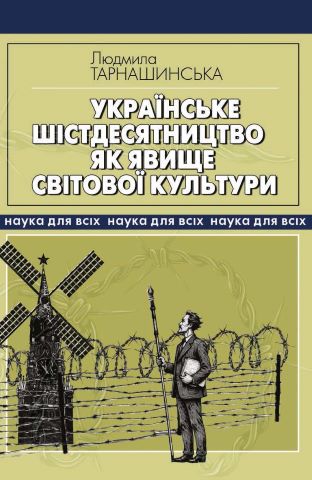
Author: Liudmyla Tarnashynska
ORCID ІD: https://orcid.org/0000-0003-2540-2658
Reviewers:
Tetyana MEYZERSKA, PhD in Philology, Professor, Shevchenko Institute of Literature, National Academy of Sciences of Ukraine
Olga SHAF, PhD in Philology, Professor, Oles Honchar Dnipro National University
Tereza KHLANOVA, Institute of East European Studies, Faculty of Philosophy, Charles University (ÚVES FF UK)
DOI: https://doi.org/10.15407/akademperiodyka.601.550
Tarnashynska’s publication, “Ukrainian Sixties Movement as a Phenomenon of World Culture,” offers readers a vital focal theme: the organic belonging of the creative output of the 20th-century Ukrainian Sixties generation to global sociocultural processes.
Having chosen freedom of self-expression and a clear civic nation-building position, they did not merely appeal to cultural luminaries, but based their own worldview stances on the principles of Renaissance civic humanism, the traditions of European and global philosophy and culture, while preserving and defending a distinct national identity. The Sixties generation embodied their vocation to “recreate” this world from the standpoint of goodness, justice, and human and national dignity. And they firmly believed in this. This flash of national self-awareness became a movement toward the generational solidarity of passionate individuals. The authority of the name carried by the representatives of this sociocultural phenomenon as the banner of the national idea rallied numerous supporters around them. After all, in times of totalitarian gloom, it was they who restored to their fellow citizens a sense of perspective—both in ideological, sociocultural, and existential spheres, and particularly in art and belles-lettres. And this thesis brings together, as in a focus, all the aspects of their place in the history and culture of Ukraine analysed in the book. Not shunning arduous labour, the Sixties generation not only fought for and brought closer Ukraine’s Independence, taking the most active part in state-building processes, but also filled the very concept of the intelligentsia with new content, turning these daily efforts into a chance to be heard by the world.
They showed how one can remain distinctly national while residing in the bosom of European countries and the context of global trends. Their response to the West — through openness and consistency of stance, creative searches, achievements and discoveries, through an inspired poetic and prose word, and paintings — appealed to the need to listen to their contradictory times, be consonant with them, and create a new modernity.
The Sixties generation sent clear signals to the world about the threats of totalitarianism nurtured by Russian imperial ideology, warned this world against inciting new wars, and placed human beings at the centre of their worldview as free individuals possessing the right to creativity and national self-determination.